Israel's Drone Dilemma: Adapting Defenses to a Shifting Threat
The strategic landscape of modern warfare is in constant flux, and few regions demonstrate this more acutely than the Middle East. Israel, long a pioneer in defense technologies, now faces an increasingly sophisticated and insidious threat: the proliferation and tactical deployment of unmanned aerial vehicles (UAVs) by groups like Hezbollah. This isn't just a new weapon; it represents a fundamental shift in asymmetric warfare, compelling Israel to rapidly adapt its formidable defense systems.
A stark illustration of this evolving menace occurred approximately three months ago when a Hezbollah drone successfully damaged Israel's "Tal Shamayim" (Sky Dew) aerostat. This sophisticated system, designed for high-altitude detection and early warning of aerial threats, was struck near the Golani Junction, a significant 32 kilometers from the border. This incident was not merely an isolated attack; it was a deeply concerning incursion into Israeli airspace, demonstrating a significant improvement in Hezbollah's precision capabilities and its unsettling ability to "deceive" existing Israeli air defense systems. The implications are profound, suggesting that future escalations, such as potential responses to the liquidation of key figures like Fuad Shukr, would undoubtedly involve a robust drone component alongside traditional rocket barrages. The era of Hezbollah drones targeting Israel has truly arrived, demanding an urgent re-evaluation of defensive strategies.
The Evolving Threat: Hezbollah's Drone Arsenal and Tactics
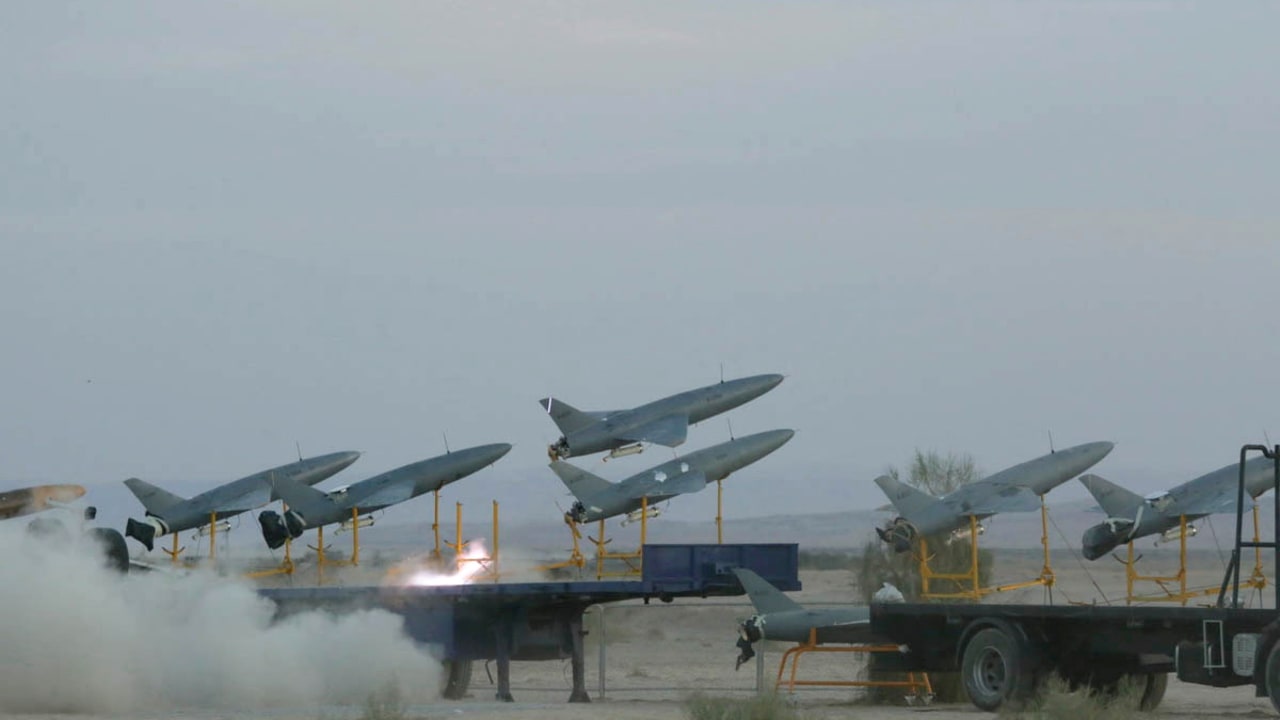
Hezbollah's adoption of drones marks a pivotal moment in its operational capabilities. While traditionally relying on a vast arsenal of rockets of varying ranges, the strategic shift towards UAVs introduces a new layer of complexity. These aren't just crude flying bombs; Hezbollah has demonstrated a diverse range of drone types and tactics:
- Kamikaze Drones: These expendable, explosive-laden UAVs are designed for one-way missions, targeting specific infrastructure or personnel. Numerous such drones have been launched towards targets across the Galilee region, aiming to inflict damage and sow panic.
- Reconnaissance Drones: Beyond direct attacks, Hezbollah has deployed sophisticated reconnaissance drones, one even flying as far as Haifa to capture imagery of various strategic locations within Israel. This intelligence-gathering capability provides critical data for future targeting and operational planning, highlighting the dual threat drones pose.
The effectiveness of these Hezbollah's drone warfare lies in several intrinsic characteristics that challenge conventional air defense systems:
- Small Size and Stealth: Drones are inherently difficult to detect due to their compact dimensions and often non-metallic construction. This makes them less visible to radar and harder to track.
- Variable Trajectories and Altitudes: Unlike ballistic missiles with predictable trajectories, drones can fly at very low altitudes, navigate complex terrain, and alter their flight paths, making interception significantly more challenging.
- Proximity of Launch: Many drones are launched from areas extremely close to the Israeli border. This drastically reduces the reaction time for Israeli air defense systems, sometimes leaving only seconds to identify, track, and engage a threat.
- Cost-Effectiveness: A critical factor in asymmetric warfare, drones are relatively inexpensive to produce and deploy compared to the advanced missile defense interceptors required to neutralize them. This economic imbalance can quickly become unsustainable for defenders.
IDF Spokesperson Daniel Hagari has frequently acknowledged the reality that Israel's air defense is "not hermetic." This candid admission underscores the difficulty of achieving a 100% interception rate against such a diverse and persistent threat, necessitating continued vigilance and adherence to Home Front Command directives by civilians.
Israel's Defense Dilemma: Adapting to Asymmetric Warfare
For decades, Israel has invested heavily in developing state-of-the-art missile defense systems like the Iron Dome and David's Sling, primarily designed to counter large-scale rocket and missile attacks. However, as Fabian Heinz, a researcher at the Institute for Strategic Studies, aptly points out, "less attention was given to drones." This oversight, while understandable given the predominant threats, has created a critical gap, leading to a perceived "lack of effective means of protection against this threat."
The "Swords of Iron" war provided a harsh but invaluable learning curve. Israeli forces were forced to confront an unprecedented volume of drones, effectively "learning on the battlefield" how to counter these new tactics. This experience, unfortunately, came at a cost, with many drones successfully reaching their targets, causing casualties, as tragically demonstrated by the drone explosion in Hurfeish.
The Institute for National Security Studies (INSS) report on the Tal Shamayim attack further emphasized that Hezbollah's actions "demonstrate the enemy's improved accuracy and its ability to 'deceive' Israeli air defense systems." This isn't just about technological superiority; it's about tactical innovation and exploitation of existing vulnerabilities. The dilemma for Israel is multifaceted: how to defend a relatively small, densely populated country against swarms of cheap, stealthy, and persistent threats without bankrupting its defense budget or over-stretching its resources.
Proactive Measures and Defensive Innovations
Despite the challenges, Israel is actively engaged in a multi-pronged approach to counter the evolving drone threat. This includes both offensive measures to degrade Hezbollah's capabilities and defensive innovations to enhance protection:
- Targeting Drone Units: Israel has demonstrated a clear policy of striking Hezbollah's drone infrastructure and personnel. On January 7th, the IDF announced the liquidation of a Hezbollah terrorist from Unit 127 in Juwaya, Southern Lebanon, a unit directly responsible for drone launches. This was the second operative from this specific unit eliminated within a short span, signaling a focused effort to dismantle the organization's drone operational capabilities. These preemptive strikes are crucial for degrading the enemy's capacity and deterring future attacks. For more insights on this strategy, consider reading Targeting Drone Units: How Israel Combats Hezbollah's UAVs.
- Technological Innovation: Recognizing the limitations of existing anti-missile systems against drones, Israel is heavily investing in new counter-UAV (C-UAV) technologies. These include:
- Electronic Warfare (EW): Sophisticated jammers and spoofing systems can disrupt drone control signals or GPS navigation, causing them to crash or veer off course.
- Directed Energy Weapons (DEWs): The development of high-energy laser systems offers a potentially cost-effective solution for neutralizing swarms of drones, as a single laser can engage multiple targets.
- Specialized Interceptors: While expensive, smaller, more agile interceptor missiles are being developed to counter drone threats, alongside improvements in traditional short-range air defense systems.
- Advanced Sensor Networks: Enhancing radar, electro-optical, and acoustic detection systems to identify small, low-flying objects in complex terrains.
- Enhanced Intelligence Gathering: Continuous and precise intelligence is paramount to identify launch sites, drone assembly facilities, and key operatives, allowing for targeted strikes and preemption.
Moreover, civilian preparedness remains a critical component. The importance of heeding the directives from the Home Front Command – such as seeking shelter during alarms – cannot be overstated, as air defense systems, while advanced, cannot provide a hermetic seal against every single drone.
The Broader Implications and Future Outlook
The rise of Hezbollah drones against Israel is not just a localized conflict; it reflects a global trend. Drone technology, once the exclusive domain of advanced militaries, is now accessible to state and non-state actors alike. This democratizes aerial warfare, making it more challenging for established powers to maintain air superiority. The lessons learned by Israel in countering Hezbollah's UAVs will have profound implications for defense strategies worldwide.
The ongoing arms race between offense and defense dictates that as new threats emerge, so too must new countermeasures. Israel's continuous adaptation, investing in both kinetic and non-kinetic counter-drone solutions, and actively targeting enemy capabilities, demonstrates a commitment to maintaining its security edge. However, the sheer volume and evolving sophistication of these threats mean that a truly comprehensive and hermetic defense will likely remain an aspirational goal, requiring constant innovation and a multi-layered approach.
Conclusion
The drone dilemma facing Israel represents a significant paradigm shift in its security challenges. Hezbollah's calculated and increasingly effective use of drones, from reconnaissance missions to kamikaze attacks deep within Israeli territory, has exposed vulnerabilities and necessitated rapid adaptation. While Israel possesses formidable air defense capabilities and is actively developing advanced counter-drone technologies and targeting operational units, the inherent advantages of drones – their cost-effectiveness, stealth, and tactical flexibility – ensure that this remains a persistent and evolving threat. The imperative for Israel is clear: to continue innovating, collaborating internationally, and maintaining a proactive stance to secure its skies against this shifting and insidious form of warfare.